Dare to Lead: The Leadership Book That Finally Explains Why Smart People Avoid Hard Conversations
Dare to Lead: The Leadership Book That Finally Explains Why Smart People Avoid Hard Conversations
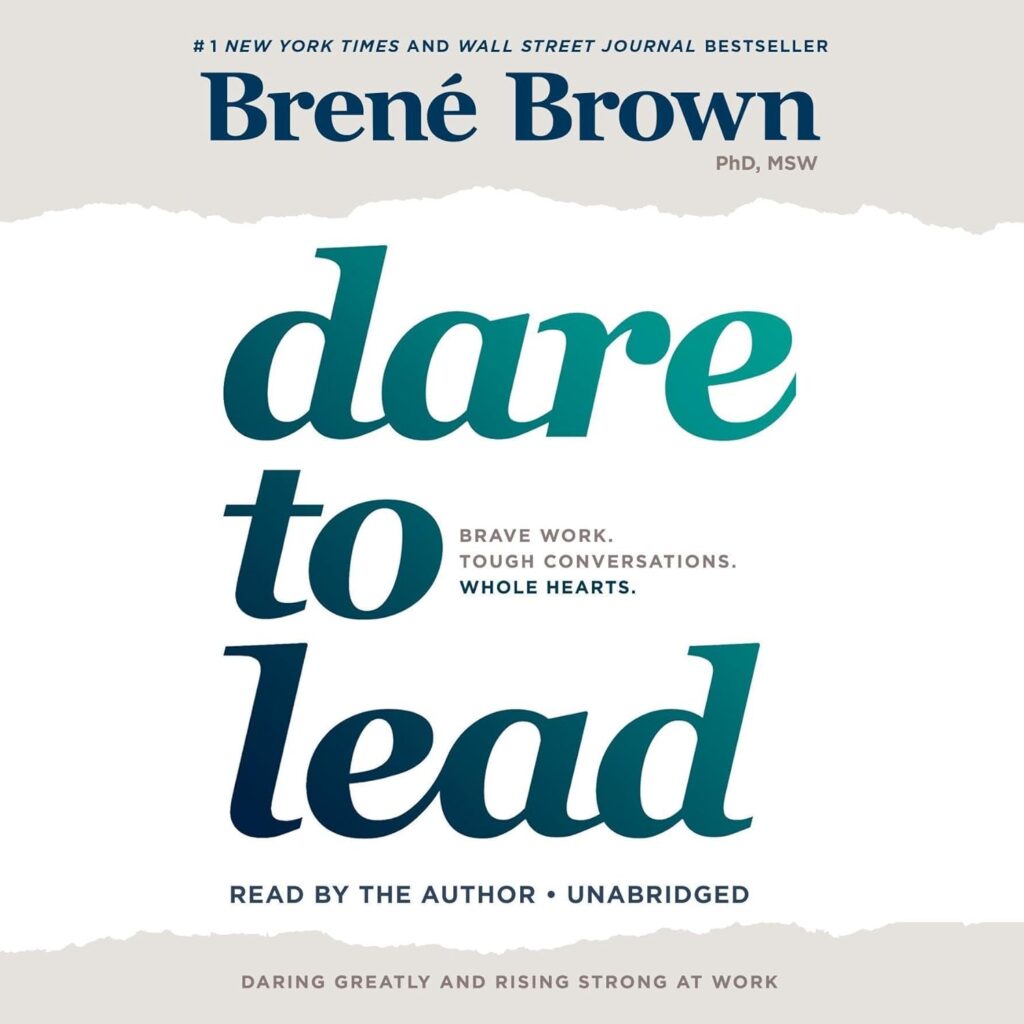
Leadership books often promise to make you a better leader in a few hundred pages. More influence. Better teams. Bigger results. Somewhere around chapter three, someone starts talking about "high-performance culture," and you realize you've read this book before.
Dare to Lead by Brené Brown takes a different route.
It barely talks about strategy.
At first, that feels like a limitation.
Then you remember how many organizations have brilliant strategies that quietly fall apart because nobody is willing to have one uncomfortable conversation.
That turns out to be the book's real subject.
Brown isn't trying to teach you how to win a market. She's asking a simpler question: What happens when intelligent adults become afraid of discomfort?
It's a surprisingly practical question.
Leadership Isn't Lost in the Boardroom
Brown's credentials often surprise people. She isn't a retired Fortune 500 CEO or a former military commander. She's a researcher with a Ph.D. in social work whose work has focused on shame, vulnerability, trust, and belonging.
That background matters because Dare to Lead isn't really about leadership in the traditional sense.
It's about human behavior under pressure.
Brown's TED Talk, The Power of Vulnerability, has been viewed tens of millions of times, suggesting she found language for something many people recognized but struggled to describe.
One of her most repeated observations appears early in the book:
"Clear is kind. Unclear is unkind."
Simple.
Almost annoyingly simple.
Then you start thinking about performance reviews, family disagreements, office politics, or that email you've rewritten twelve times because you don't want to upset anyone.
Maybe simple isn't the same as easy.
Trust Stops Being Magic
One of the strongest contributions in Dare to Lead is Brown's decision to make trust measurable.
Instead of treating trust like chemistry, she breaks it into observable behaviors through the BRAVING framework: boundaries, reliability, accountability, vault (confidentiality), integrity, nonjudgment, and generosity.
Whether you remember the acronym isn't the important part.
The important part is that trust becomes something people do rather than something they merely feel.
That's surprisingly useful.
Imagine trying to improve your golf swing by being told to "hit it better." Not much to work with.
Now imagine someone points out that your grip is inconsistent and your shoulders open too early.
Behavior beats abstraction.
Leadership works the same way.
The Conversation Most Leaders Delay
Brown argues that vulnerability isn't emotional oversharing.
It's uncertainty.
It's admitting you don't know.
It's asking questions before pretending to have answers.
That sounds reasonable until you remember how many workplaces quietly reward confidence over curiosity.
(We've all met someone who could confidently explain a process they clearly learned about fifteen seconds earlier.)
Brown pushes back against that instinct.
Not because confidence is bad.
Because false confidence carries a hidden invoice.
Eventually reality sends the bill.
Where the Book Starts Showing Its Boundaries
This is where the curator in me started asking different questions.
Brown writes as though most people are capable of trust if given the right environment.
Often that's true.
Sometimes it isn't.
The book has relatively little to say about chronic manipulation, bad-faith actors, organizational incentives, political behavior, or systems that reward dishonesty.
That's not a criticism so much as recognizing the scope of the project.
If you're leading healthy people through uncertainty, Brown offers valuable tools.
If you're rebuilding an organization where trust has already collapsed, you'll probably need additional books on organizational systems, governance, negotiation, and incentives sitting beside this one.
Different problems require different lenses.
The Unexpected Lesson
Halfway through reading, I realized something.
This isn't primarily a leadership book.
It's a maintenance manual for relationships.
Managers need it.
Parents need it.
Teachers need it.
Partners need it.
Anyone responsible for helping people grow will probably recognize themselves somewhere in these pages.
That's a broader audience than the title suggests.
The Verdict
I don't think Dare to Lead belongs on the shelf because it explains leadership completely but because it explains one part of leadership unusually well.
Brown gives language to the invisible friction that derails teams long before strategy ever gets a chance to fail. She turns trust into behaviors, vulnerability into courage, and difficult conversations into skills that can actually be practiced.
That's a meaningful contribution.
Just don't mistake it for the whole picture.
Leadership also lives in incentives, systems, decision-making, and execution. Brown intentionally leaves much of that territory to others.
If your biggest challenge is getting people to work together honestly, Dare to Lead is one of the better books you'll find.
If your biggest challenge is designing organizations, allocating resources, or navigating competitive strategy, think of this as one volume in a larger library rather than the final word.
Sometimes the hardest leadership lesson isn't learning how to speak.
It's learning why everyone else stopped.
And once you notice that, it's difficult to unsee.