The Empathy Effect: The Science Behind One Skill That Quietly Changes Every Conversation
The Empathy Effect: The Science Behind One Skill That Quietly Changes Every Conversation
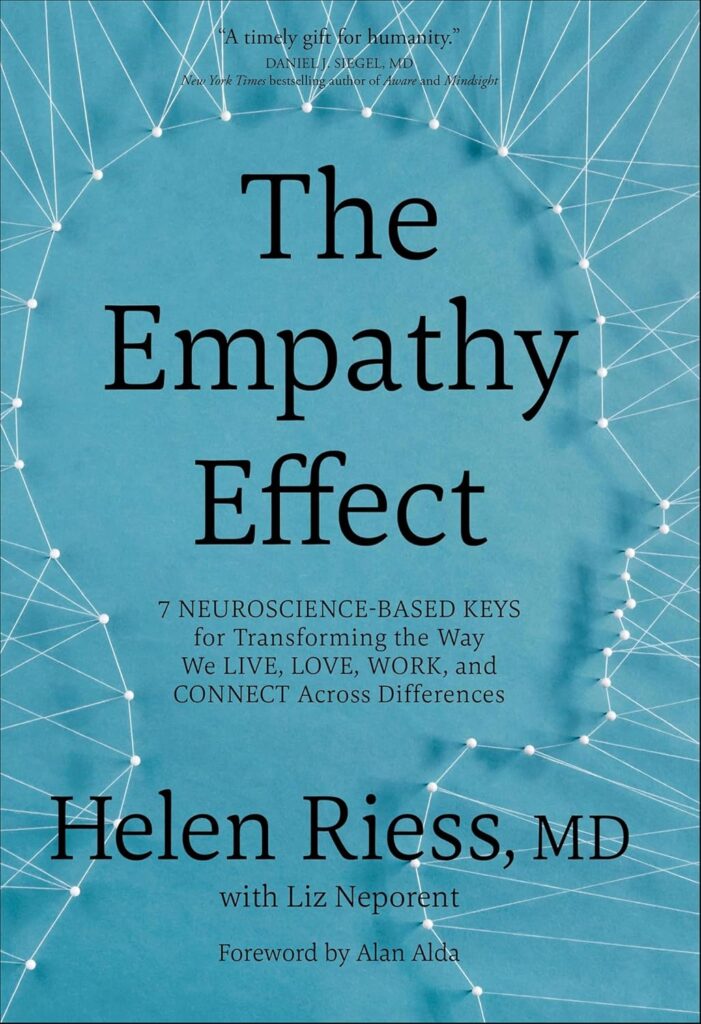
Most people don't realize they're taking a communication test dozens of times a day.
It happens at the dinner table. During a difficult meeting. While checking out at the grocery store. Even in the few seconds before answering a text message.
The funny part? Almost nobody calls it a test.
We usually blame the other person. They're too sensitive. They're impossible to read. They weren't listening. Maybe they were distracted by their phone. (Or maybe the phone was just the socially acceptable escape hatch.)
Then someone writes a book about empathy, and it's easy to assume you're about to get a lecture on "being nicer."
That's not what Helen Riess has in mind.
As a psychiatrist, researcher, and Associate Clinical Professor of Psychiatry at Harvard Medical School, Riess approaches empathy less like a personality trait and more like a clinical skill. Her work at Massachusetts General Hospital has focused on something refreshingly practical: what do people actually do that makes someone else feel understood?
That question turns out to be far more interesting than whether someone considers themselves "an empathetic person."
Empathy Leaves Clues
One of the biggest surprises in The Empathy Effect is how little emphasis it places on saying the perfect thing.
Instead, Riess spends considerable time exploring the signals we send before words ever enter the conversation.
Eye contact.
Facial expression.
Posture.
Tone of voice.
Timing.
Presence.
These are the details our brains process automatically, often before we've consciously decided whether we trust someone. Once you start paying attention, you notice them everywhere. The manager who never looks up from their laptop. The friend whose voice softens the moment you mention something difficult. The parent who kneels down instead of talking across the room.
None of these behaviors require extraordinary emotional gifts. They require attention.
That distinction matters.
The Skill You Can Actually Practice
One reason emotional intelligence sometimes feels frustrating is that it's often described like a character trait.
You're emotionally intelligent.
Or you're not.
Riess pushes back on that assumption.
Drawing from neuroscience and clinical research, she argues that empathy is composed of observable behaviors that can be practiced, measured, and improved. That idea has shaped empathy training programs for physicians and healthcare organizations around the world.
For readers who enjoy books because they change what they do on Monday morning, this is good news.
You don't have to become someone else.
You have to notice one more thing than you noticed yesterday.
The Part Parents, Coaches, and Leaders Will Appreciate
Reading this through the lens of parenting, coaching, or leadership creates an interesting shift.
It's tempting to think empathy means agreeing with everyone.
Riess doesn't make that argument.
You can understand someone's fear without sharing it.
You can acknowledge frustration without excusing harmful behavior.
You can deliver difficult feedback while still treating someone with dignity.
That's an important distinction because many people reject empathy for the wrong reasons. They've confused it with surrender, emotional exhaustion, or avoiding conflict.
Those aren't empathy problems.
They're boundary problems.
Understanding another person's experience doesn't require abandoning your own perspective.
The Science Is the Quiet Strength
The strongest feature of The Empathy Effect isn't dramatic storytelling or revolutionary philosophy.
It's credibility.
Riess draws from decades of work in psychiatry, neuroscience, and medical education. Her research has helped demonstrate that physicians who receive empathy training are perceived by patients as more empathic, supporting the idea that relational skills can be intentionally developed rather than left to personality or chance.
That evidence gives the book weight.
Instead of asking readers to accept empathy as a virtue, she asks them to observe it as a behavior.
That's a subtle difference with significant consequences.
What Makes This Book Different
There are plenty of books that explain why relationships matter.
This book spends more time explaining how they happen.
If you've read Daniel Goleman on emotional intelligence or Brené Brown on vulnerability, Riess fills in another piece of the puzzle. She focuses on the visible moments between two people. The pause before responding. The expression that says, "I'm still with you." The tone that lowers someone's defenses before any problem gets solved.
It turns out those moments aren't accidental.
They're skills.
Like any skill, they improve with practice.
(Also like any skill, they occasionally disappear the moment you're hungry, tired, or trying to assemble furniture.)
Final Thoughts
Some books leave you with a new vocabulary.
Others leave you watching the world differently.
The Empathy Effect belongs in the second category.
After finishing it, you'll probably notice conversations you've been having for years. You'll recognize signals you used to miss. You'll catch yourself listening a little longer before reaching for an answer.
That's a quiet kind of transformation, but it may be the one that lasts.
Who should read it?
Anyone who works with people.
Parents trying to build emotionally resilient children. Coaches helping clients navigate difficult seasons. Healthcare professionals. Teachers. Managers. Partners. Friends.
In other words, anyone whose success depends on another human being feeling seen.
Because sometimes the most important thing we communicate isn't what we know.
It's whether the person across from us believes we noticed they were there.