
Win-Win or No Deal: The Strategy That Beats “Crush the Other Guy” Every Time
The Myth of Winning Everything
Somewhere along the way, we absorbed a lie that business is war, markets are zero-sum, and if someone else profits, you must have lost.
It makes for great movie scenes. It also makes for terrible long-term strategy.
Many traders have noticed: when closing a position early and booking solid profit, there’s usually still some juice left in the trade. Someone on the other side might make money too. And weirdly enough, that doesn’t bother them.
Because the goal isn’t domination. The goal is durability.
And that’s where things get interesting.
What if the strongest strategy in markets, partnerships, and life isn’t extracting every last dollar, but structuring outcomes so everyone involved benefits enough to come back to the table?
Not soft or naïve, but strategic.
Win-win or no deal.
Let’s unpack it.
The Zero-Sum Illusion
We’re conditioned to think in binaries. Winner. Loser. My gain. Your pain.
But real systems are more complex.
In his book The 7 Habits of Highly Effective People, Stephen R. Covey wrote:
“Win-win is not a technique; it’s a total philosophy of human interaction.”
That’s not just some motivational poster language but systems thinking.
Most high-level environments operate on repeat interactions. When you plan to transact again tomorrow, next quarter, next year, the game changes. Extractive behavior becomes expensive.
Which brings us to markets.
Trading: Why Leaving Money on the Table Is a Feature
Let’s say you sell a put. You collect premium. The option decays. You close at 70 percent max profit instead of waiting for expiration.
Did you “lose” the remaining 30 percent?
Or did you:
- Reduce gamma exposure
- Free up collateral
- Improve capital velocity
- Increase annualized return
(And sleep better, which is underrated alpha.)
Markets are not one-off duels. They’re ecosystems.
Market makers hedge. Institutions transfer risk. Retail traders speculate. Hedgers insure. Different time horizons, different objectives.
When both sides get what they need, liquidity thrives. That’s not just sentiment. That’s real economic structure.
Even Warren Buffett has repeatedly emphasized long-term partnership thinking. In his 1989 letter to shareholders at Berkshire Hathaway, he wrote:
“We enjoy the process far more than the proceeds.”
That mindset is not about squeezing counterparties but building repeatable advantage.
Yes, sometimes you could squeeze more.
But experience will teach you: squeezing more increases risk asymmetry.
The trade is not the point. The system is. And a system that works is worth more than any one trade.
Business Partnerships: The Negotiation That Didn’t Collapse
Now, let’s step out of markets.
In negotiation theory, the dominant academic framework is the concept of expanding the pierather than dividing it.
The foundational work came from Getting to Yes by Roger Fisher and William Ury. They wrote:
“The basic problem in a negotiation lies not in conflicting positions, but in the conflict between each side’s needs, desires, concerns, and fears.”
Read that again. That is useful knowledge!
Most negotiations fail because people argue positions instead of solving underlying interests.
For Example:
You want higher revenue share.
They want brand control.
Those aren’t mutually exclusive. But if you frame it as a tug of war, someone has to fall in the mud.
But when you structure a deal where:
- Incentives align
- Risk is proportionate
- Upside scales together
You create something much harder to destroy.
Win-win doesn’t mean equal. It means aligned.
(And yes, sometimes the right answer really is no deal. That’s part of the discipline.)
Costco vs. the Squeeze Model
Now, let’s talk about a real corporate-world example:
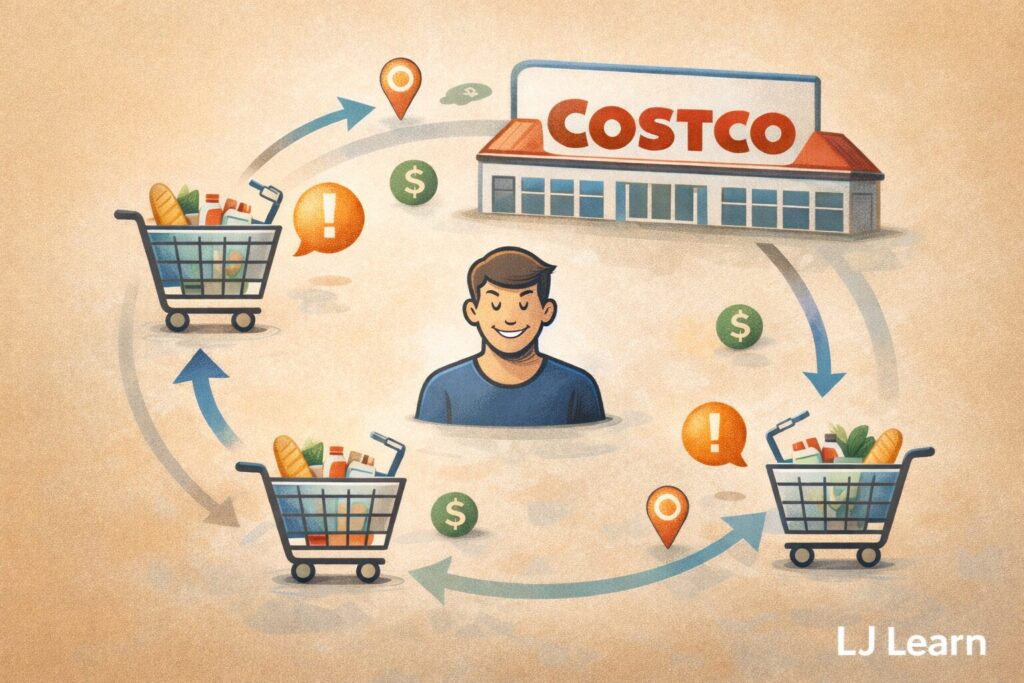
At Costco, the model is famously long-term and relationship oriented. Their co-founder Jim Sinegal said:
“If you hire good people, give them good jobs, good wages and good benefits, generally something good is going to happen.”
Costco caps markups. Pays employees above industry average. Keeps margins tight.
Conventional wisdom says that should compress profit.
But the reality they’ve experienced is that loyalty compounds.
Customers renew memberships. Employees stay longer. Suppliers maintain relationships.
Short-term extractive logic would say squeeze margins harder.
Long-term strategic logic says build a system where everyone benefits enough to stay.
Guess which model scales more predictably?
The Dark Side: When It’s Not Win-Win
Let’s not romanticize this too much.
There are genuinely adversarial contexts.
Predatory contracts.
Asymmetric information.
One-time scams.
Win-win thinking does not mean being naïve.
It means:
- Vet the counterparty
- Understand incentives
- Price risk correctly
- Walk away when alignment isn’t real
Because no deal is better than a structurally lopsided deal.
In options trading terms: if the premium doesn’t justify the tail risk, pass.
In partnerships: if values diverge and governance is unclear, pass.
In life: if someone only wins when you lose, pass.
Win-win or no deal.
The Compounding Effect (Most People Miss)
Here’s the part most people overlook.
When you operate on win-win:
- Reputation compounds
- Trust compounds
- Optionality compounds
- Network strength compounds
You become someone people wantto transact with. They know you, like you and trust you.
When the Other Side Defects
In repeated game theory, cooperation often outperforms defection across time horizons. If you’re going to interact with the same people over time, working in ways that benefit both sides usually produces better long-term results than trying to squeeze short-term advantage. Not because it’s some moral high ground, but because it creates stability, trust, and repeat opportunity, which compound.
But let’s address the uncomfortable question.
What if the other side defects?
The simplistic answer is: you stop playing with that counterparty.
But reality is more nuanced than that.
Not every defection is betrayal.
Sometimes it’s survival.
Liquidity tightens.
Priorities shift.
Circumstances change.
Someone takes a deal elsewhere because, in that moment, they need to.
That doesn’t automatically mean the cooperative framework collapsed.
The real question isn’t, “Did they defect once?”
The real question is, “Is this a pattern?”
Repeated systems tolerate variance.
Fragile systems collapse at the first deviation.
If someone defects occasionally but stays inside the ecosystem, they’re still participating in a cooperative model. They haven’t abandoned alignment. They’ve exercised optionality.
Think about Costco.
Not every member fills up at the gas station every single time.
Sometimes the line is too long.
Sometimes another station is closer.
Sometimes convenience wins.
But they tend to renew their membership.
They come back.
They continue participating in the system.
That’s cooperation over time.
If a customer never returns, that’s defection as strategy.
If they return consistently but make occasional choices elsewhere, that’s fluctuation inside a durable relationship.
One erodes trust capital.
The other preserves it.
And here’s the quiet strength of the philosophy:
You don’t panic at a single deviation.
You observe patterns.
If someone repeatedly extracts without reciprocating, you draw a boundary, you withdraw access. No drama. Just discipline.
But you don’t abandon the win-win model because of one anomaly.
Mature systems are resilient. They absorb noise. They adapt. They continue.
Win-win isn’t about perfection.
It’s about alignment over time.
And that’s a very different game.
The Real Flex
The real flex isn’t crushing the other side.
It’s building structures so durable that both sides walk away thinking:
“That worked.”
That’s when:
- Deals close faster
- Capital flows smoother
- Referrals increase
- Risk decreases
And ironically, your long-term return improves.
Because sustainability beats extraction. Every time.
The Deal You Don’t Regret

Cooperation fuels growth and progress
Win-win is not weakness.
It’s strategic restraint.
It’s understanding that systems outperform impulses. That durability beats dominance. That compounding rewards alignment.
Sometimes you will leave money on the table.
Sometimes someone else will profit after you exit.
And that’s a good thing,
That means the system worked.
And here’s the last question to sit with:
If your strategy only works when someone else gets crushed, how long can it really last?
Win-win or no deal.
Want to Think Like This More Often?
If this resonated, you’ll love what we’re building at LJ Learn.
Join the LJ Learn waitlist by subscribing to our newsletter:
https://ljlearn.com/newsletter
Explore our growing resources directory:
https://ljlearn.com/resources/
Join the LJ Learn Collective group on Facebook:
https://www.facebook.com/groups/ljlearncollective
And follow us on social media as we continue unpacking strategy, systems, and sustainable success.
Because the future belongs to people who know how to build deals that last.
Thanks for Reading!
Looking for more insights, exclusive offers, and expert tips? Stay connected with the LJ Learn newsletter! Join our community of curious minds and passionate learners to continue your lifelong learning journey.