How to Find Food Banks and Pantries Anywhere in the World (Without Getting Lost in a Maze of Dead Ends)
Most people don’t think about food assistance until they need it. That sounds obvious, but it creates a strange problem. When your refrigerator is getting empty, your bank account is already stretched thin, and your stress level is climbing by the hour, you’re suddenly expected to become an expert in navigating a system you’ve never used before.
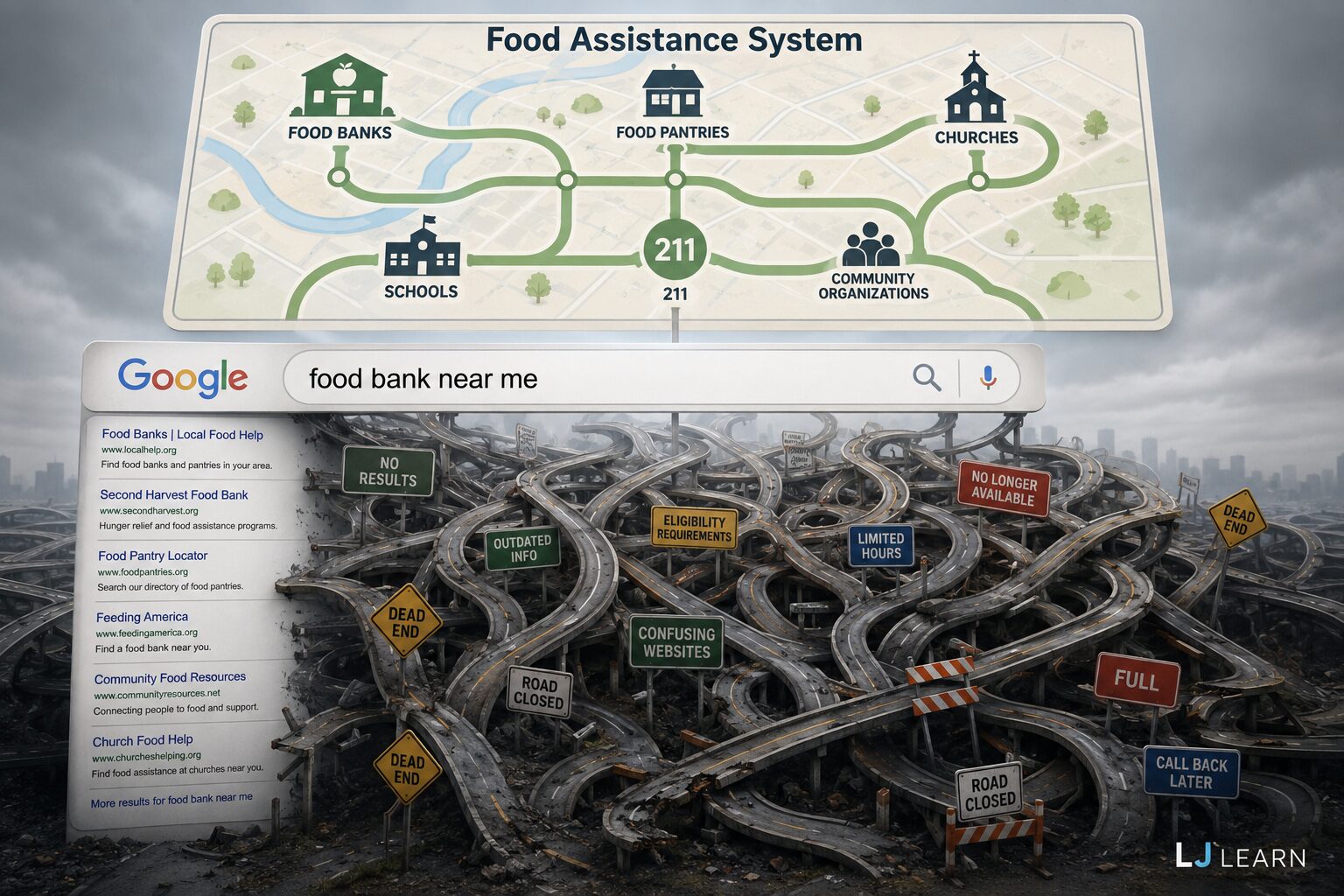
So you do what almost everyone does. You open Google and type:
“Food bank near me.”
Seems reasonable. Unfortunately, that’s often where the confusion begins. Because food assistance isn’t a single organization. It’s a network.
And if you don’t understand how the network works, you can spend hours clicking through websites, calling disconnected phone numbers, or showing up at locations that only distribute food on the third Thursday of the month from 9:00 AM to 11:00 AM (which somehow feels like information they could have mentioned on the homepage).
The good news? Finding food assistance is usually much easier once you understand the system behind it. So let’s walk through it.
The Problem Isn’t a Lack of Food Resources
Here’s the part that surprises many people. In the United States alone, the food assistance network reaches tens of millions of people every year.
According to the nonprofit organization Feeding America, its network of food banks, pantries, and meal programs helped provide billions of meals annually through partner agencies across the country.
The challenge isn’t always that resources don’t exist, but that they’re often scattered across hundreds of organizations.
Imagine trying to find a specific book without knowing the library exists. You might search every classroom in town and conclude there are no books. The food assistance system works similarly. Most people start at the shelf instead of the library, so to speak.
Food Banks and Food Pantries Are Not the Same Thing
This distinction matters. A food bank is typically a large distribution hub. Think warehouse. Think trucks. Think pallets of food moving between organizations.
A food pantry is usually where individuals and families actually receive food. Think local church. Think community center. Think neighborhood nonprofit. Think the place where someone hands you groceries.
Many people search for food banks when what they actually need is a food pantry.
It’s a little like searching for a power plant when you’re trying to charge your phone. Technically connected. Practically different. Once you understand this distinction, your search becomes dramatically easier.
Start With the People Who Already Know the System
When someone is lost in a city, the fastest solution is usually asking someone who already knows the streets.Food assistance works the same way.
In many areas of the United States and Canada, dialing 211 connects callers with community resource specialists who maintain updated information about food programs, housing assistance, transportation services, and emergency support.
According to 211:
“211 is an easy to remember telephone number that connects callers to information about critical health and human services in their community.”
One phone call can often save hours of searching. Not bad for three digits.
The Secret Weapon Most People Never Use
Here’s where many searches go sideways. People become obsessed with finding one perfect resource. What actually works better is finding the regional network.
For example, in the United States, Feeding America’s food locator connects people with local partner agencies throughout its network. Instead of hunting individual organizations one at a time, you’re accessing an entire ecosystem. That changes everything. Because if Pantry A has no availability today, Pantry B might. If Church C only distributes monthly, Community Center D may have weekly hours. You stop relying on a single door and start accessing the whole building.
Don’t Ignore the Unexpected Helpers
This is where things get interesting. Many food resources aren’t advertised as food resources.
Libraries often maintain community resource guides. Schools frequently know about backpack meal programs and family assistance initiatives. Religious organizations may operate food pantries even if you aren’t a member. Community centers often maintain referral lists. Some hospitals even employ social workers who can connect patients to local food assistance programs.
It’s one of those strange situations where asking the wrong person sometimes leads you to exactly the right place. (Kind of like getting directions from someone who doesn’t know where you’re going but somehow knows the person who does.)
Search Smarter, Not Harder
If your first search isn’t producing results, change the wording.
Try:
- Food pantry near me
- Free groceries near me
- Community food pantry
- Emergency food assistance
- Meal assistance
- Soup kitchen
- Food distribution
Tiny wording changes often produce completely different results. Search engines are helpful. They’re just not mind readers, at least, not quite yet.
Call Before You Go
This may be the most valuable tip in the entire article. Hours change. Eligibility rules change. Distribution schedules change. Volunteer staffing changes. Weather changes. Life changes. A quick phone call can prevent a wasted trip. It takes two minutes and can save two hours. That is a trade most people would happily make.
What If You’re Outside the United States?
The same principles apply almost everywhere.
Start with:
- National food bank networks.
- Municipal social services.
- Community organizations.
- Religious institutions.
- Local charities.
- Community information hotlines.
The names vary by country. The structure is remarkably similar. People helping people tends to look surprisingly consistent across cultures.
The Bigger Lesson
Finding food assistance is more about navigating and understanding systems than finding food. Most people assume support programs are hidden. In reality, they’re often fragmented. The resources exist. The challenge is knowing how they connect. Once you understand the network, the search becomes far less overwhelming. And that’s true for more than food assistance. It’s true for housing support. It’s true for healthcare navigation. It’s true for debt relief resources. It’s true for almost every community support system.
The people who find help fastest usually aren’t the people who know the most. They’re the people who know where to start.
So if you or someone you know needs food assistance today, don’t spend hours wandering through search results hoping to stumble onto the right answer.
Start with the network. The right door is much easier to find when you know which building you’re standing in.
And if all else fails, remember this: Asking for directions has saved more people than pretending they already know the way.
Thanks for Reading!
Looking for more insights, exclusive offers, and expert tips? Stay connected with the LJ Learn newsletter! Join our community of curious minds and passionate learners to continue your lifelong learning journey.