Here’s How People Actually Find Housing Help Anywhere in the World
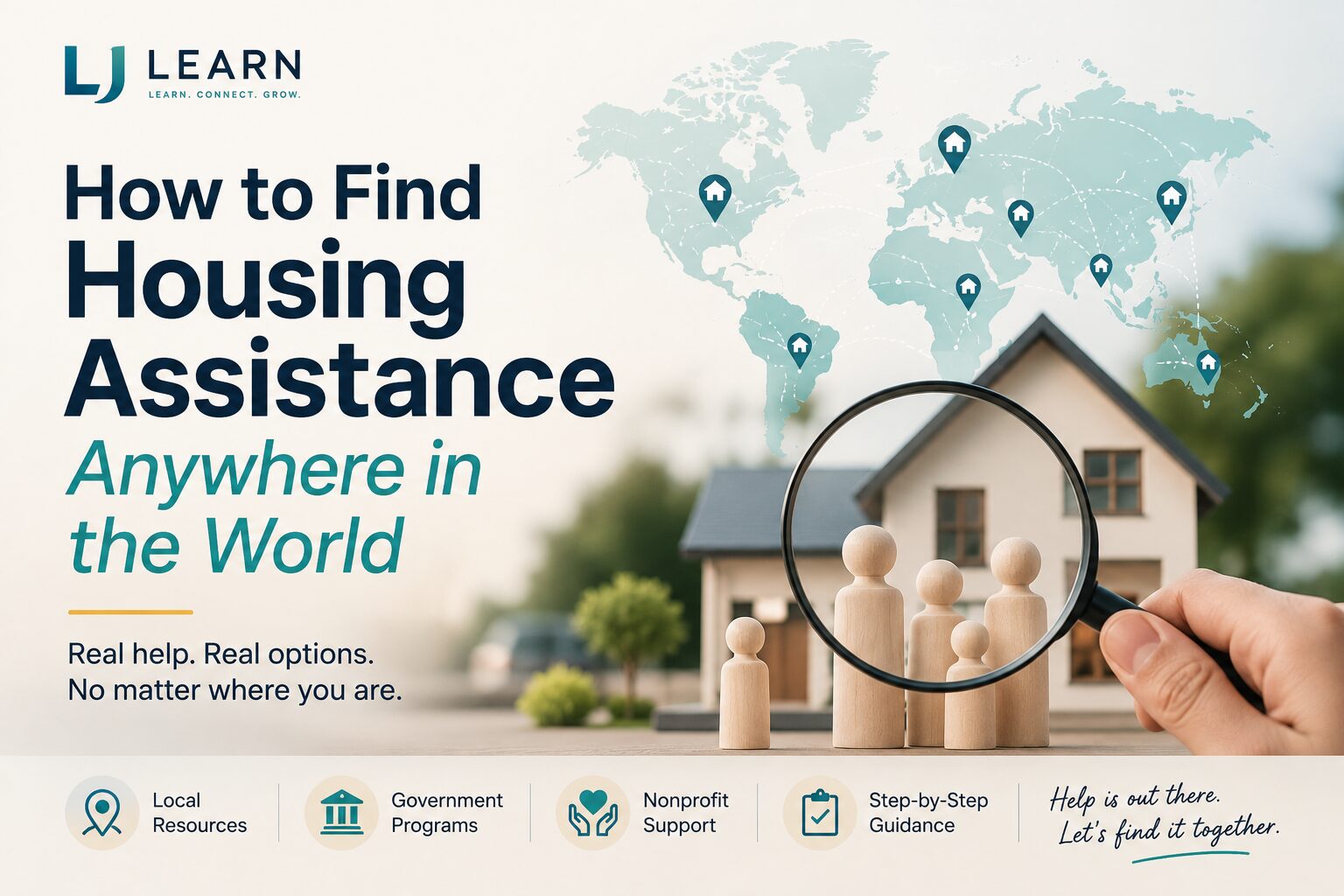
Most people only start looking for housing assistance when things are already on fire. A notice shows up. A landlord gets quiet. Rent stops feeling like a monthly bill and starts feeling like a countdown.
So you do what everyone does: you search “housing help near me.”
And that is where things usually fall apart. Because the internet does not show you a system. It shows you fragments. Forms. Dead ends. Numbers that go nowhere. Advice written for a state or country you do not live in.
Some conclude that housing help is a single program you can “find.” It is not. It is a layered system disguised as chaos. And once you see the structure (we’ll show it to you now), the entire search process changes.
Most people think they are looking for a single door to knock on when they are actually standing inside a building with three floors and no signs.
The Hidden Structure Nobody Explains
Across most countries, housing support is not one single program. It is three overlapping layers that do different jobs. The mistake people make is trying to skip straight to long-term help when they are actually in short-term crisis, or vice versa. So let’s break down the system.
Layer 1: The “Stop the Bleeding” Layer
This is emergency response housing support.
It exists for moments like:
- eviction risk
- sudden loss of income
- unsafe housing conditions
- homelessness risk
Here is the key insight most people miss:
This layer does not care about perfect paperwork. It cares about speed.
You are not “applying for housing.”
You are entering a stabilization system.
How people usually find it
- emergency hotlines
- municipal social services
- local crisis nonprofits
- community shelters and outreach teams
In the United States, a common entry point is 211, but other countries have equivalent local crisis referral lines.
This layer often provides:
- emergency shelter
- short term rental help
- utility assistance
- rapid case management
Many people often avoid this layer because they assume it means “I have hit bottom,” but in reality, it is just a different doorway into the system. Not a final verdict.
Layer 2: The Government Housing System Layer
This is where long-term affordability lives. It is also where patience goes to be tested…
Different countries name it differently, but the structure is similar:
- public housing programs
- rent subsidy systems
- social housing waitlists
- housing vouchers or income based rent programs
How to find it anywhere
Search patterns matter more than exact names.
Try:
- “public housing authority + your city or region”
- “social housing application + country”
- “rent assistance government program + location”
This layer is slow by design.
That is not a bug. It is the queue.
People often assume slow means broken. It does not. It just means demand exceeds supply.
This is the layer where documentation matters, income thresholds matter, and waitlists are normal.
It is not about urgency. It is about eligibility over time.
Layer 3: The Bridge Layer Most People Never See
This is where things get interesting.
Because between crisis help and government housing, there is a third ecosystem that quietly keeps people from falling through the cracks.
It includes:
- nonprofit housing organizations
- community action agencies
- legal aid housing clinics
- domestic violence housing programs
- tenant support groups
These are often the fastest entry points into anything else.
How to find them anywhere
Search:
- “rent assistance nonprofit + city”
- “housing support charity + region”
- “eviction prevention program + location”
Or use local resource directories and social service aggregators.
This layer does something important:
It translates your situation into the language the government system understands.
Because most people do not fail at housing systems, they fail at translation.
The Real Pattern Nobody Tells You
Here is the hidden logic that connects everything.
Most housing systems are not designed to be searched directly. They are designed to be entered through referral pathways.
So when people say “I cannot find help,” what they usually mean is:
“I am trying to enter the system from the wrong door.”
That is not a personal failure. That is a map problem.
A Small Reality Check (and a Useful Shift)
If you are reading this for yourself or someone else, here is the decision filter that actually works:
- If housing loss is imminent → start with emergency systems
- If you need long term affordability → start with government housing waitlists
- If you are stuck between systems → start with nonprofits and legal aid
You are not choosing a program. You are choosing an entry point. Housing assistance is not a single solution hiding somewhere on the internet. It is a layered system that only becomes visible when you know how to look at it. Once you see the structure, the confusion starts to collapse. And what looked like a maze starts to look more like a set of doors you were just never shown how to read, until right now.
Maybe the real problem was never access. Maybe it was orientation.
Thanks for Reading!
Looking for more insights, exclusive offers, and expert tips? Stay connected with the LJ Learn newsletter! Join our community of curious minds and passionate learners to continue your lifelong learning journey.