Becoming a Community Outreach Volunteer for the LJLearn Recovery Resources Directory
A Guide for New Volunteers and Interns
If you are reading this, you are probably someone who has noticed how hard it is for people in crisis to find the right help at the right time. Maybe you are a student looking for meaningful service hours. Maybe you have been through a hard chapter yourself and want to make the path easier for someone else. Maybe you simply live in a community where people need more than they currently have access to, and you want to be part of closing that gap.
This article explains what it means to volunteer with the LJLearn Recovery Resources Directory, how the directory works, what your role looks like in practice, and where the boundaries are. It is written so that anyone can read it, whether or not you have ever done this kind of work before.
What LJLearn Is and Why It Exists
LJLearn.com is a mission-driven resilience ecosystem founded on the belief that when people feel safe, supported, and understood, they rise. Through its Care Coordination for Families in Crisis initiative, community partnerships, and the Concordia Initiative framework, LJLearn provides zero-cost support for individuals navigating severe life transitions and personal crisis. Founded by emergency management professional and social impact strategist Laban Johnson, LJLearn bridges emotional intelligence with practical systems thinking to help people find clarity and build long-term resilience.
At the center of this ecosystem is the Recovery Resources Directory, found at ljlearn.com/recover.
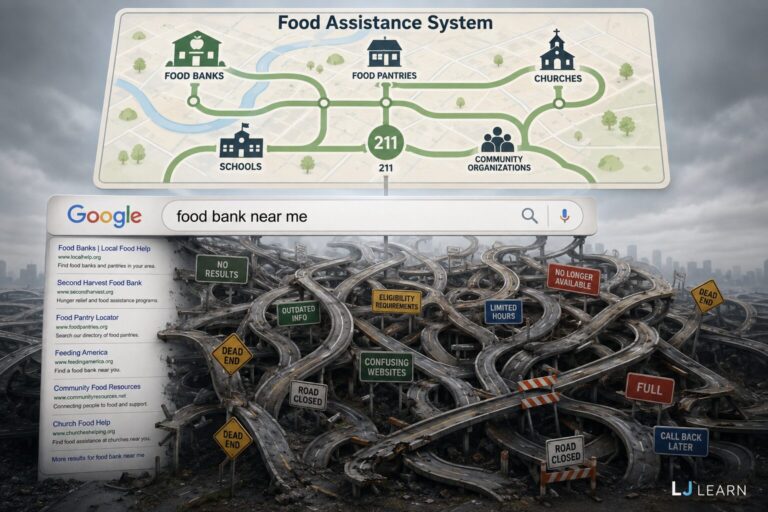
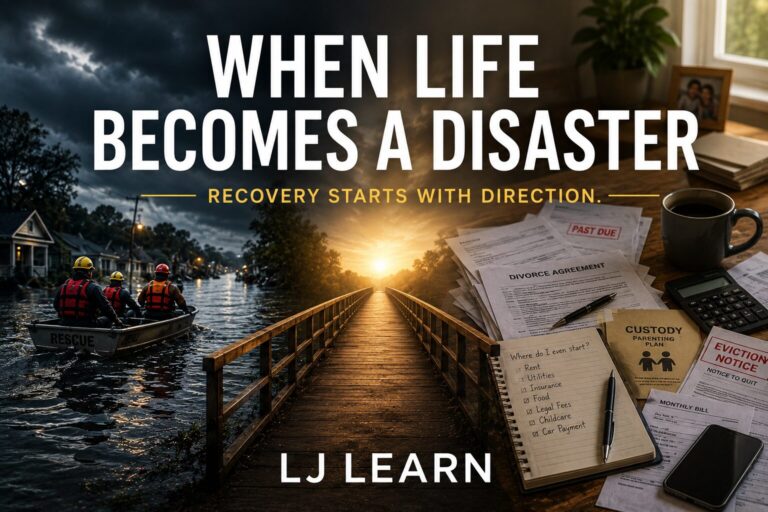
The directory exists because of a simple but painful truth. When someone is hit with a job loss, a medical emergency, a legal threat, a natural disaster, or a family crisis, they are often overwhelmed not just by the event itself but by not knowing where to even begin. There is help available in almost every situation, but it is scattered across dozens of agencies, websites, hotlines, and forms, and finding it while you are also trying to survive the crisis is exhausting.
The directory organizes this chaos into a clear five-phase framework. It is free to use, does not collect personal information, and is available to anyone at any time.
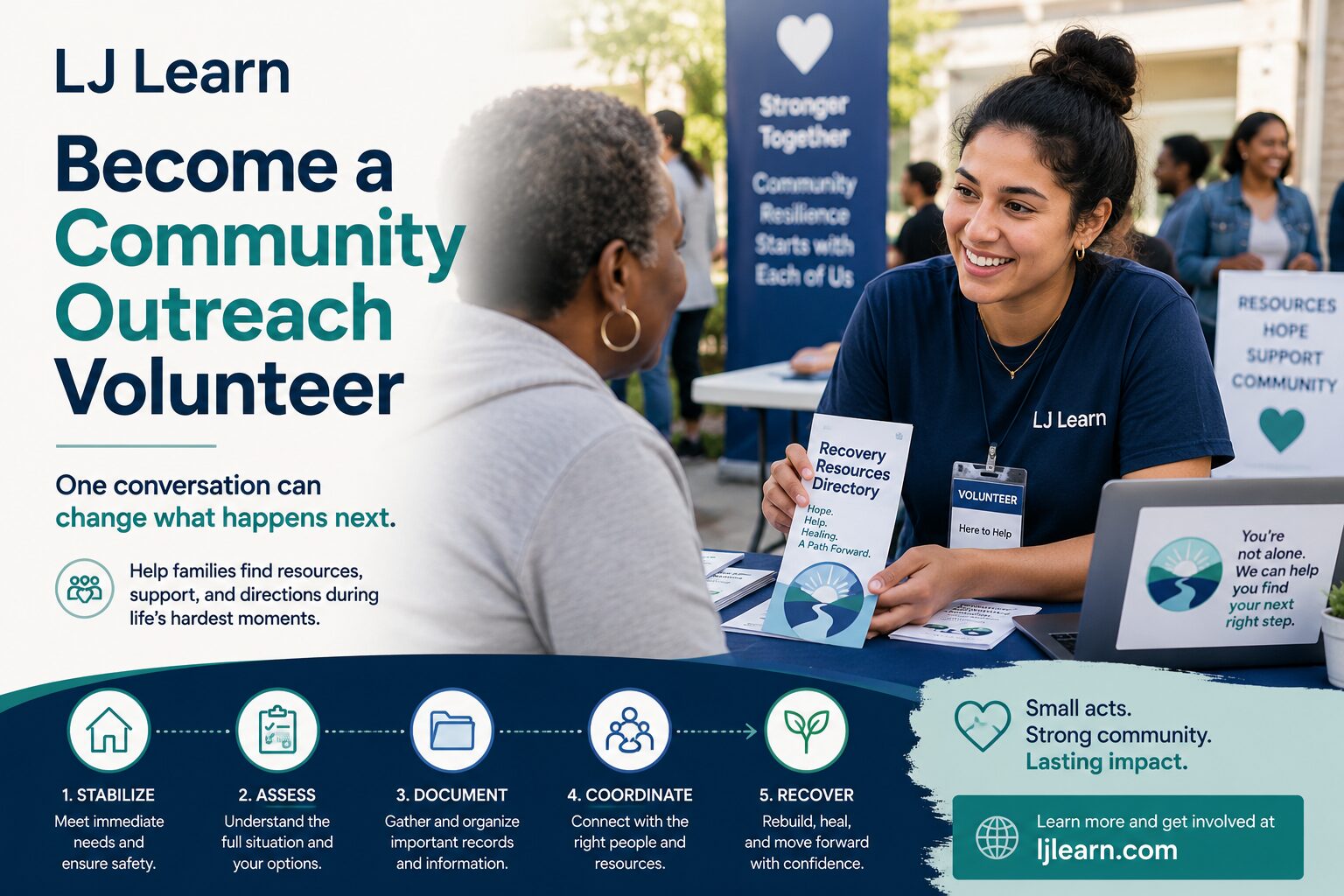
The Five Phases of Recovery
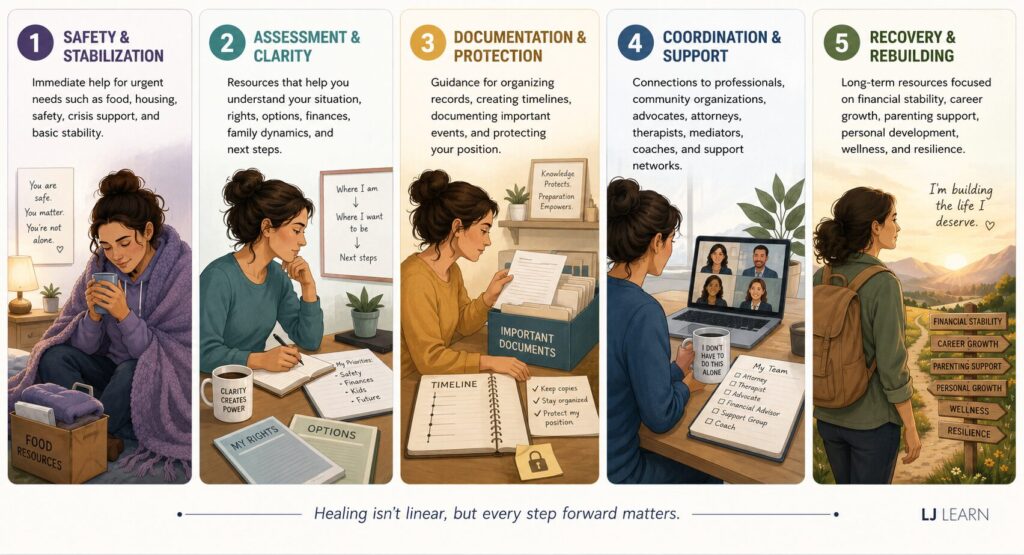
Understanding these five phases is the foundation of everything a volunteer does, because it gives you a way to quickly orient someone toward the right starting point.
Stabilize is the first phase. This covers the most immediate needs a person has when a crisis hits. Food, shelter, safety, and emergency cash assistance fall here. If someone is in the middle of a crisis right now, this is almost always where they need to start.
Assess is the second phase. Once the immediate emergency is handled, the next step is getting a clear picture of the full situation. What resources does the person have. What do they owe. What deadlines are approaching. Who are the key people and organizations involved. This phase is about clarity before action.
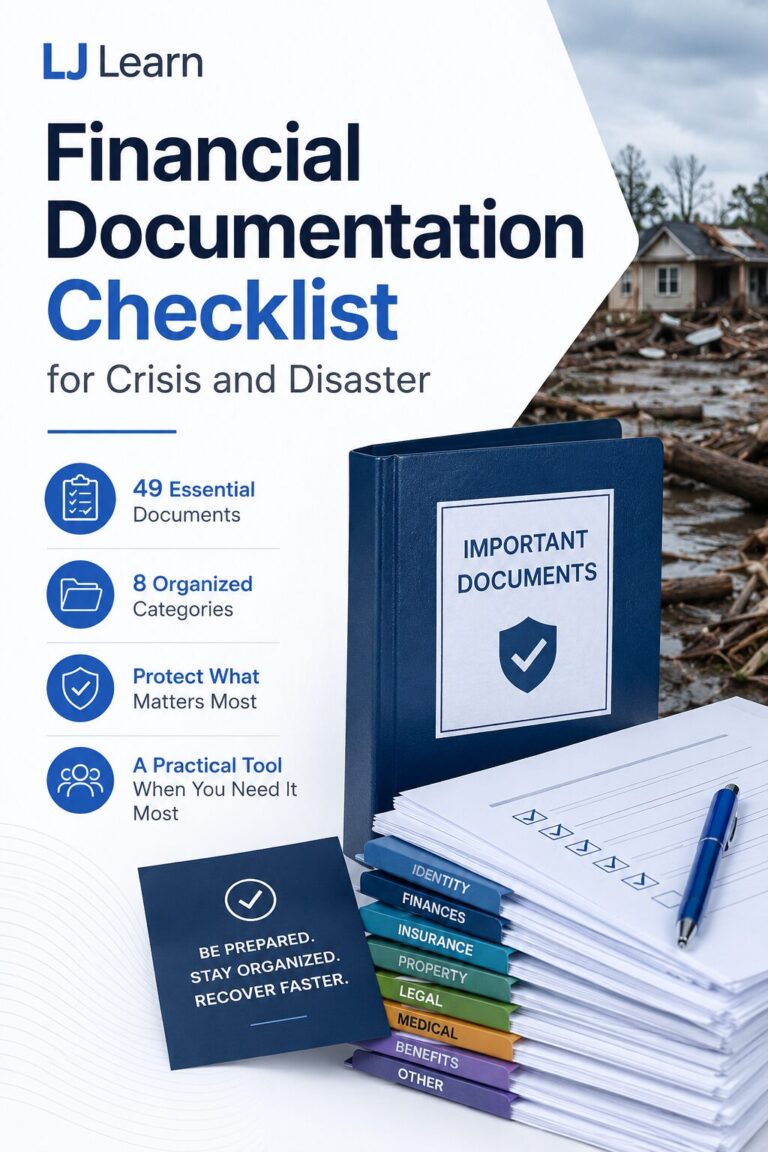
Document is the third phase. Recovery of almost any kind depends on paperwork. Medical records, financial statements, insurance documents, legal correspondence, and other records determine what options will be available later. This phase helps people gather and organize what they need.
Coordinate is the fourth phase. This is where a person begins working with the systems and people who can help. Connecting with agencies, attorneys, counselors, case workers, and other service providers, and managing all the moving pieces.
Recover is the fifth and final phase. This is the long-term work of rebuilding. Financial recovery, emotional healing, stability planning, and moving forward.
When you talk to someone in the community, you do not need to walk them through all five phases. Often, a short conversation will reveal which phase they are in, and you can point them toward that part of the directory as a starting place.
What a Community Outreach Volunteer Actually Does
The role is best described in two words: warm referral. You are not a counselor, a case manager, or an expert on anyone’s situation. You are a bridge between someone who needs help and a resource that was built to provide it.
In practice, this might look like sharing the link to ljlearn.com/recover in a community Facebook group when someone posts asking for help. It might mean having a short conversation at a food pantry, a church event, or a resource fair, and mentioning that there is a free directory organized specifically for situations like the one the person described. It might mean following up with someone who expressed interest and answering basic questions about what the directory covers.
The most effective outreach does not feel like outreach at all. It feels like one person helping another person find their footing.
How to Talk About the Directory
You do not need a script, and you should not try to sound like a brochure. The most natural approach is to lead with the person’s situation, not with the platform itself.
Instead of saying, “check out this website,” it often works better to say something like, “there is a free directory built specifically for people dealing with that kind of situation, and it might help you figure out where to start.”
Remember that the directory lists options, not endorsements. You are not vouching for any single provider. You are pointing someone toward a tool that can help them find their own next step.
If someone asks about something specific and you are not sure whether the directory covers it, that is completely fine. You can tell them the directory is organized by phase and category and they are welcome to browse, or you can offer to check and follow up.
Where Your Role Begins and Ends
This is the most important part of this article, and it deserves to be read carefully.
Your role is referral only. You connect someone to the directory. The directory connects them to resources. Those resources connect them to professionals who are equipped to actually help with their specific situation. You are the first link in that chain, not the last, and that is exactly as it should be.
You should never provide legal, medical, financial, or mental health advice, even if you have personal experience with a similar situation. Personal experience is valuable and human, but it is not the same as professional guidance, and conflating the two can do real harm.
If someone is in immediate danger, whether that is a medical emergency, a safety threat, or a mental health crisis, your only role is to direct them to emergency services. Call 911 for immediate physical danger or medical emergencies. For a mental health crisis or suicidal thoughts, the 988 Suicide and Crisis Lifeline is available by call or text, anytime, anywhere. Do not attempt to manage that situation yourself.
If a conversation moves into territory that feels beyond what you can responsibly handle, the right answer is honesty. It is always better to say I’m not sure, but I can find out, than to guess.
Who This Role Is For
You do not need a degree, a license, or prior professional experience to volunteer in this role. What matters most is that you are trustworthy, that you genuinely care about the people in your community, and that you can have a calm, respectful conversation.
This role tends to be a strong fit for social work, counseling, public health, and human services students looking for service-learning hours or internship experience. It is also a meaningful fit for people who have personally navigated housing instability, medical crisis, financial hardship, or legal stress and want to help others find an easier path. Faith community members, neighborhood association leaders, and parent group organizers who are already trusted voices in their communities often find this role a natural extension of work they are already doing. Professionals in healthcare, education, legal aid, or financial services are also welcome to bring their networks and perspective to this work.
What Volunteers Receive
In addition to the experience itself, volunteers receive documented service hours suitable for academic credit, professional portfolios, or continuing education logs. After ninety days of consistent participation, volunteers can request a reference letter. Most importantly, volunteers gain firsthand insight into how community resilience actually works at the ground level, and become part of a growing network of people committed to helping families navigate some of the hardest moments of their lives.
Getting Started
If this sounds like work you want to be part of, the first step is simple. Reach out through ljlearn.com/feedback to express interest. New volunteers complete a short orientation before their first outreach activity, covering everything in this article in more depth along with answers to common questions.
The people this directory serves are real, and they are often navigating the hardest stretch of their lives. A single conversation, at the right moment, pointing someone toward the right resource, can change what happens next for an entire family. That is the work, and we are glad to have you considering it.
Thanks for Reading!
Looking for more insights, exclusive offers, and expert tips? Stay connected with the LJ Learn newsletter! Join our community of curious minds and passionate learners to continue your lifelong learning journey.