Helping the Helpers
A policy advocacy initiative of LJLearn
Why this exists
Every helping profession, social work, counseling, nursing, psychology, teaching, asks its newest members to earn their place through supervised hours in the field. That system can produce excellent training. It can also be exploited. This initiative exists to name the difference clearly, document where the line gets crossed, and push the professions we depend on to actually live up to what they claim to offer their trainees.
The problem, plainly stated
Field placement, internship, and residency hours are the entry price for nearly every helping profession. In theory, this hours requirement builds real-world skill under real supervision. In practice, it often becomes something else, a supply of free or underpaid labor for agencies that could pay their trainees and choose not to.
The exploitation isn’t that the work is unpaid. We believe volunteering and service have real value, and plenty of people give their time freely because they believe in the work. The problem is when an agency bills clients, Medicare, Medicaid, or insurance for the exact services a trainee is providing, while paying that trainee nothing, because it knows the trainee needs the hours and has no real alternative. That no longer volunteerism, but instead an agency collecting revenue on labor it isn’t paying for, dressed up as education.
This pattern repeats across fields. A licensing body requires hours. An institution supplies those hours with no strong incentive to make them humane. A trainee, usually young, often new to full-time responsibility, with limited knowledge of the laws and regulations being set aside in front of them, has no real leverage, because walking away means losing the time and money already invested in the credential.
Law students are trained to read contracts and spot when something is off. Helping-profession students are trained toward empathy and compliance, which are strong clinical instincts and weak self-advocacy instincts, especially when the person overseeing the exploitation is the same person responsible for their education.
The protections that should apply, Title IX and mandatory reporting when a trainee is harassed by a client, disability accommodation requirements, university grievance policies, usually already exist. The failure is rarely that the rules are missing. It’s that nobody tells trainees the rules exist. And if you don’t know a rule exists, you can’t invoke it, and you can’t recognize when it’s being broken.
How we think about it
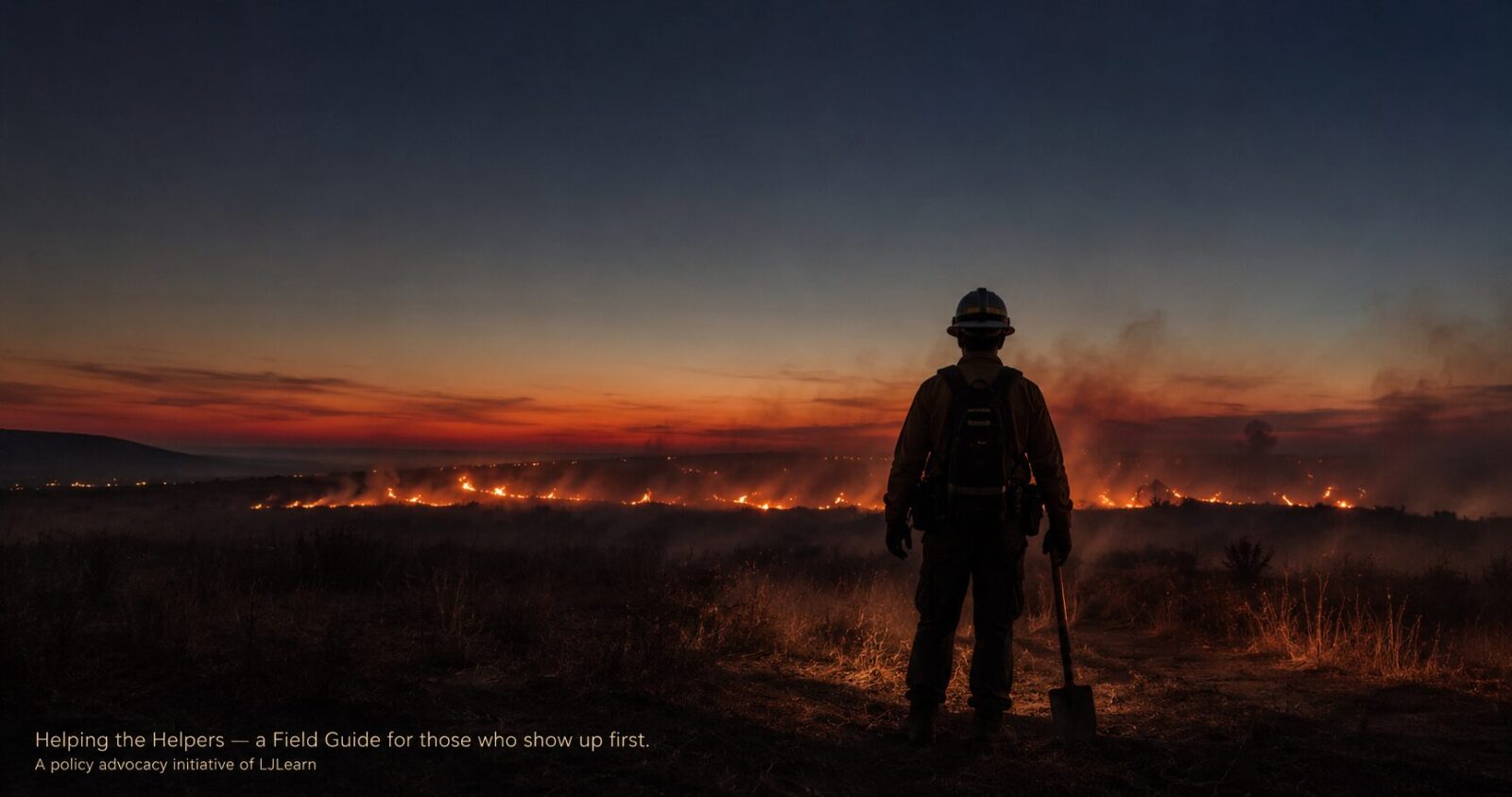
Helping work is a lot like fighting a wildfire that never goes out. People enter these fields wanting to help one person, one family, one crisis at a time. Instead of real on-the-job training, many are handed an axe, a shovel, and a helmet, and pointed at the front line. Whether a placement becomes formative or damaging depends heavily on which way the wind is blowing that week, who the supervisor happens to be, how well-resourced the agency is. Luck as much as merit.
That inconsistency is the thing this initiative exists to reduce.
What we believe
Trainees have the right to be treated and trained to a high standard. That is the actual deal made when someone enrolls and pays tuition for a professional credential.
Wanting real supervision, real safety planning, and real education is not entitlement. It is asking a profession to be what it claims to be.
Safety incidents deserve accountability, not just optional time off.
Documentation, transparency, and known rights protect trainees and improve the professions they’re entering.
Trainees have the right to leave a bad placement and find a better one. There is always another fire to fight.
What we’re building
A resource base of trainee rights across fields, plainly written, not buried in policy language.
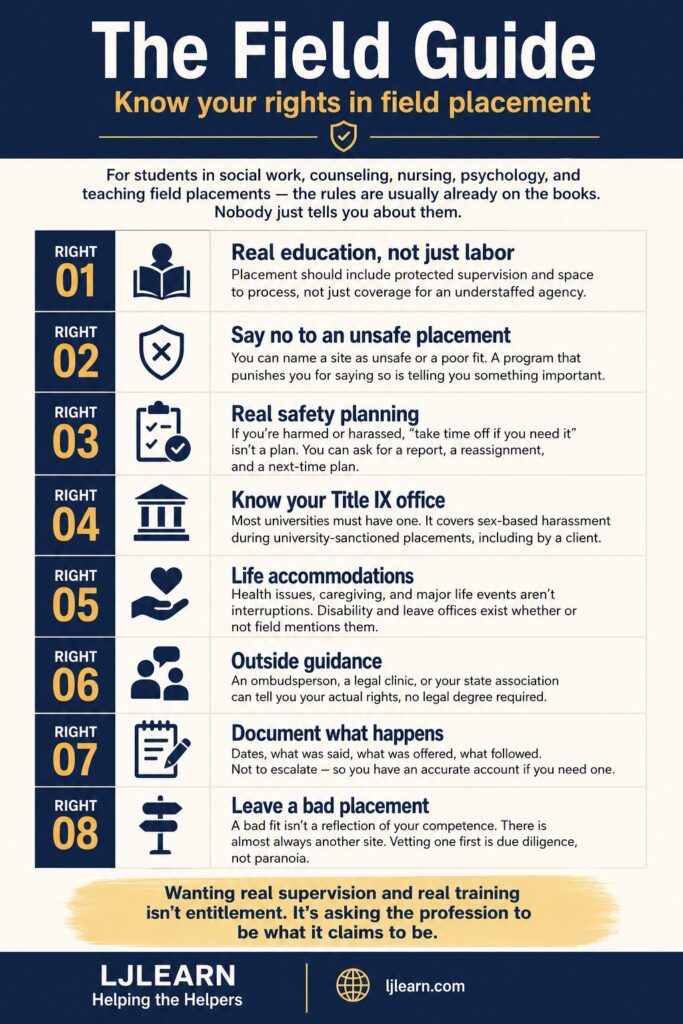
Documentation guidance, so trainees know how to build a record if something goes wrong.
A directory of outside resources, ombudspersons, legal clinics, Title IX offices, professional associations, so trainees have somewhere to go beyond the chain of command that failed them.
A growing record of patterns and cases across professions, used to advocate for structural change, not just individual coping.
To every trainee reading this
You’re not wrong for seeing this clearly, even early. That clarity will make you better at this work than any burnout-as-professionalism model ever could.
“Rock the boat, for yourself, for everyone coming behind you, and for the people who came before you but lacked the courage or the knowledge to do it.” – LJ
Thanks for Reading!
Looking for more insights, exclusive offers, and expert tips? Stay connected with the LJ Learn newsletter! Join our community of curious minds and passionate learners to continue your lifelong learning journey.