The 5 Phases of Recovery: What to Do When Life Falls Apart
Most people think they need a plan when things are going well.
They don’t.
The moment most people start looking for a plan is when life suddenly stops making sense.

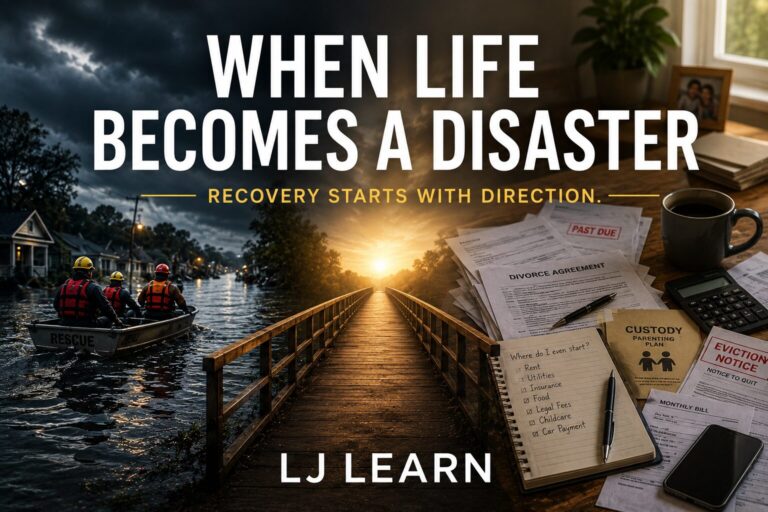
A house floods.
A marriage ends.
A custody dispute begins.
A debt collector starts calling.
A parent gets sick.
A job disappears.
A business fails.
A diagnosis arrives.
And suddenly you’re sitting at your kitchen table at 2:17 in the morning wondering a question nobody ever seems to answer:
“What am I supposed to do first?”
Here’s the strange part.
The biggest mistake people make during a crisis is not making bad decisions.
It’s trying to solve everything at once.
When you’re overwhelmed, your mind naturally starts jumping between problems:
“I need a lawyer.”
“I need money.”
“I should call my sister.”
“I need therapy.”
“I need a new job.”
“I should probably sleep.”
(That last one is usually a good idea, by the way.)
The result is often paralysis.
You can become incredibly busy without actually moving forward.
After years of observing disaster recovery, crisis response, advocacy work, education, and family support systems, we noticed something surprising:
People recover from very different crises in remarkably similar ways.
The details change.
The recovery process doesn’t.
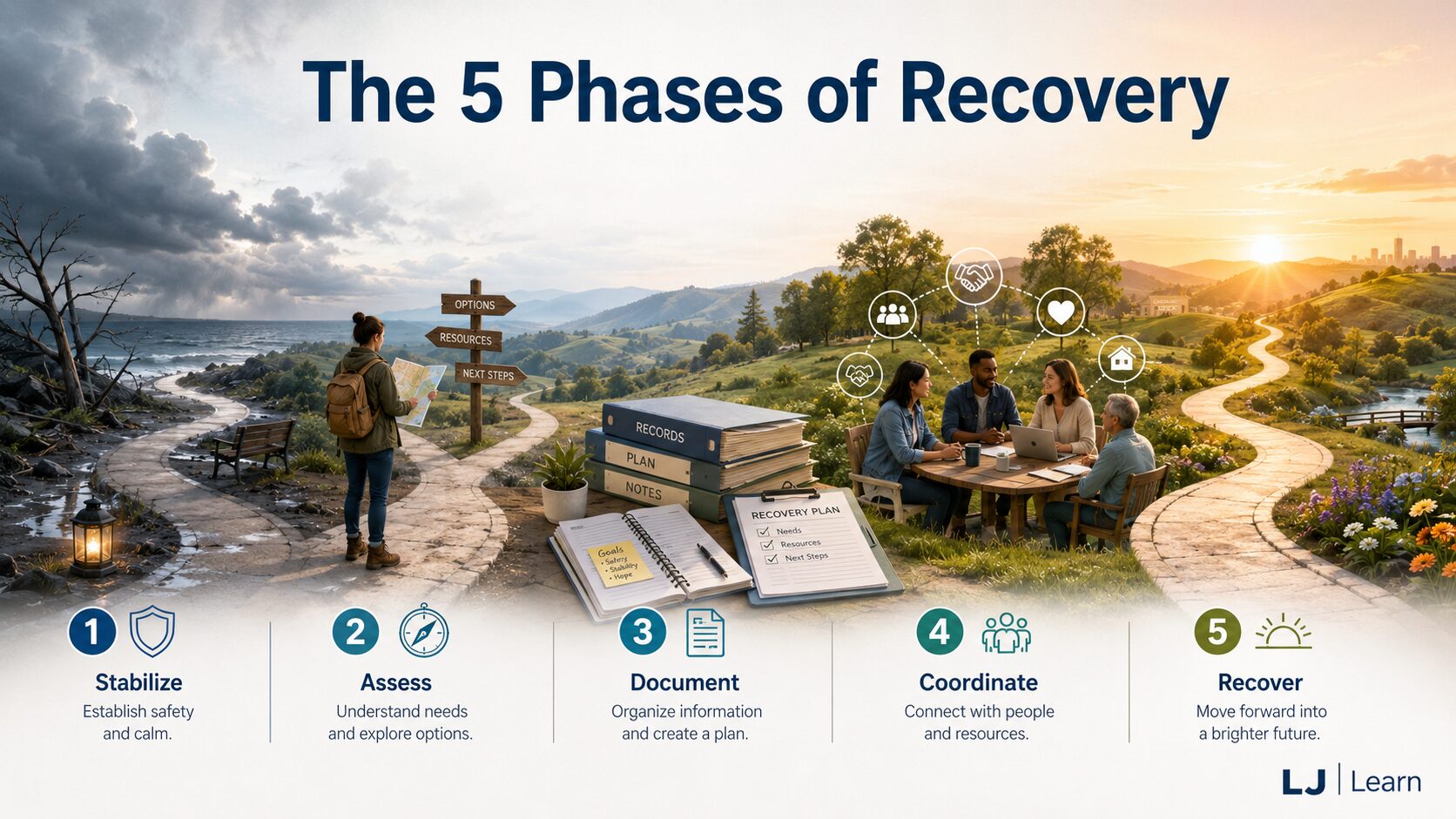
That’s why we developed a simple framework built around five phases of recovery.
Not because life is simple. It’s not. But because overwhelmed people need simplicity.
Before We Begin: A Lesson From Disaster Recovery
When a hurricane strikes a community, emergency responders don’t begin by debating long-term economic development.
They don’t immediately redesign every damaged building.
They don’t launch a ten-year strategic plan on day one.
First, they stabilize the situation.
Then they assess the damage.
Then they document what happened.
Then they coordinate resources.
Then they rebuild.
Life crises work much the same way.
Family crises.
Financial crises.
Health crises.
Legal crises.
Relationship crises.
Different events.
Similar recovery patterns.
As Fred Rogers famously recalled from advice his mother gave him:
«”Look for the helpers. You will always find people who are helping.”»
Recovery is rarely a solo activity.
The goal is not to have all the answers.
You only need to know your next step.
Phase 1: Stabilize
Stop the bleeding.
This phase is often the hardest because emotions are running high and everything feels urgent.
The temptation is to solve the entire crisis immediately.
The reality is that stability comes first.
Questions to ask:
– Are there immediate safety concerns?
– Is housing secure?
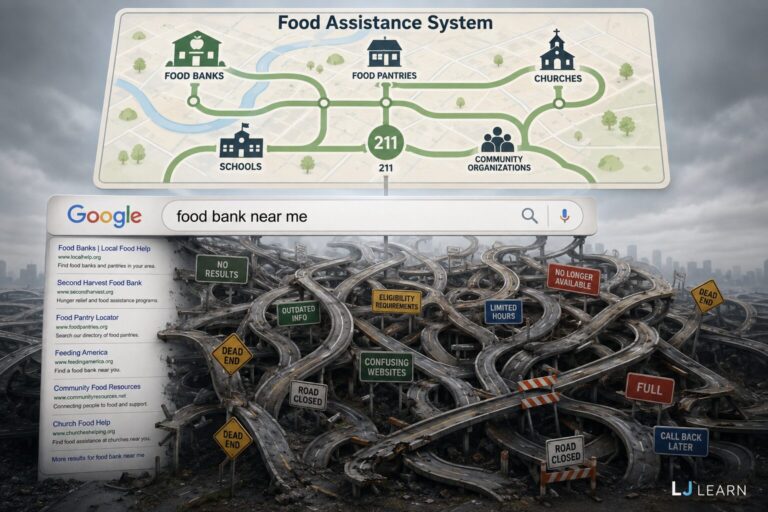
– Is food available?
– Are there urgent medical issues?
– Is someone at risk of harm?
– What absolutely cannot wait?
Notice what isn’t on this list.
Winning.
Fixing.
Proving.
Getting revenge.
Drafting a 37-page manifesto to send to everyone involved. (Yes, people do this.)
The purpose of stabilization is simple:
Create enough breathing room to think clearly.
(If you need immediate resources, the Recovery Resources Directory has a Stabilize category to start with.)
Phase 2: Assess
Understand what is actually happening.
Many people spend weeks or months reacting before they fully assess their situation.
Assessment means separating:
– Facts from feelings and assumptions
– Immediate threats from future concerns
– Important issues from loud issues
This is where clarity begins to emerge.
Questions to ask:
– What happened?
– Who is involved?
– What systems are involved?
– What deadlines exist?
– What resources do I already have?
– What information am I missing?
This phase often feels slower than people want.
That’s normal.
A rushed assessment usually creates more work later.
Phase 3: Document
Organize reality.
Documentation is one of the most underrated recovery skills.
Memories fade.
Stress distorts details.
Timelines become blurry.
Documentation creates clarity.
Examples include:
– Timelines
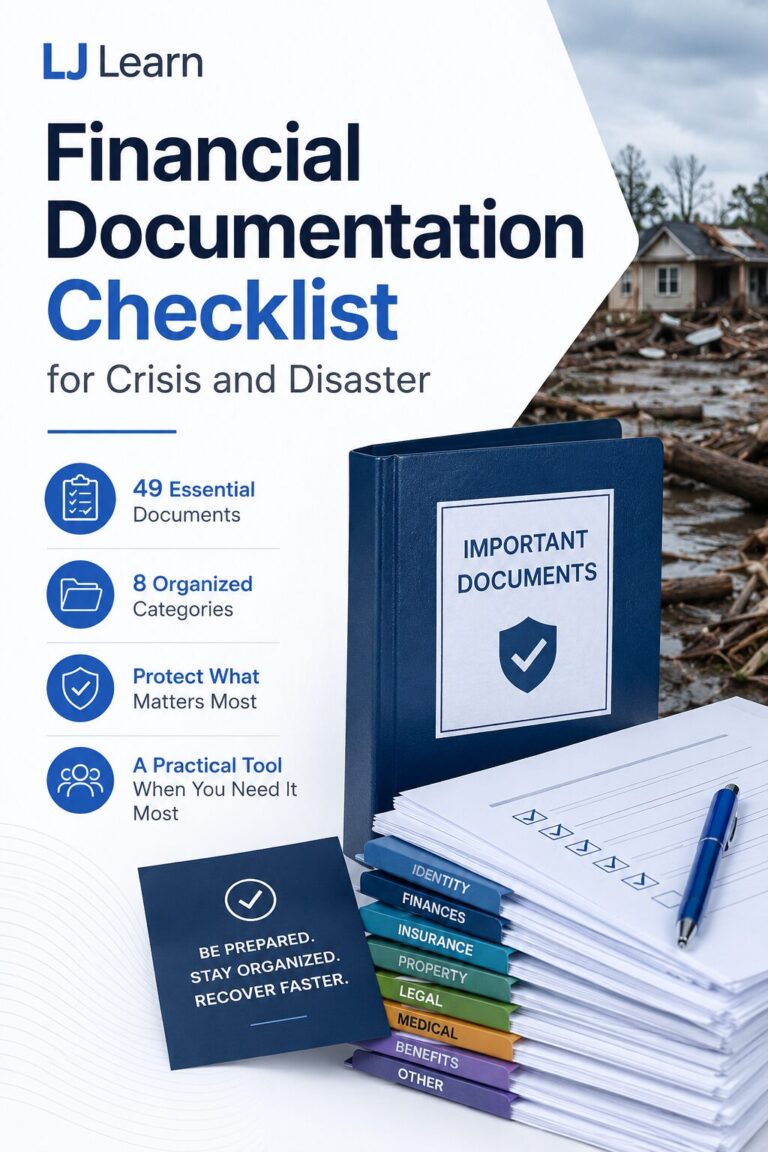
– Financial records
– Medical records
– Communications
– Court documents
– Employment records
– Resource lists
For pro se litigants, caregivers, families in conflict, and people navigating complex systems, documentation often becomes the difference between confusion and confidence.
You don’t need perfect records.
You need organized records.
There’s a big difference.
Phase 4: Coordinate
Connect with the right support.
Many people try to carry crises alone.
Unfortunately, life does not award bonus points for unnecessary suffering.
Coordination means identifying who can help.
Depending on the situation, that might include:
– Therapists
– Coaches
– Attorneys
– Mediators
– Financial counselors
– Community organizations
– Support groups
– Friends and family
The goal is not to build the biggest team possible.
The goal is to build the right team.
One trusted helper is often more valuable than twenty conflicting opinions from social media.
Not sure where to start building that team? The Recovery Resources Directory organizes vetted organizations by category, so you’re not searching alone.
Phase 5: Recover
Rebuild something stronger than survival.
Many people think recovery means returning to exactly where they were before.
Sometimes it does.
Often it doesn’t.
Recovery may include:
– Financial rebuilding
– Improved relationships
– Better boundaries
– New skills
– Health improvements
– Career changes
– Personal growth
This phase can take time.
Sometimes months.
Sometimes years.
That doesn’t mean recovery isn’t happening.
Progress often looks much less dramatic than movies suggest.
Usually it looks like:
– One appointment kept
– One bill paid
– One difficult conversation completed
– One good decision repeated consistently
Recovery is rarely flashy.
It’s just powerful.
The Secret Most People Miss
The five phases are not a straight line.
People move back and forth.
A family may be recovering financially while still documenting information for a legal issue.
A caregiver may be coordinating resources while simultaneously stabilizing a new health challenge.
That’s normal.
Life is messy.
The framework isn’t meant to force life into neat categories.
It’s meant to help you identify what matters most right now.
Your Next Step
If you’re reading this during a difficult season, you do not need to solve your entire situation today.
You do not need a perfect plan.
You do not need every answer.
Ask yourself one simple question:
Which recovery phase am I in right now?
Then focus on that phase.
Not all five.
Just one.
Because recovery doesn’t usually happen when people finally figure everything out.
Recovery begins when they identify the next right step… and take it. -LJ
If your next step involves finding real help, the Recovery Resources Directory is organized around these same five phases.

Thanks for Reading!
Looking for more insights, exclusive offers, and expert tips? Stay connected with the LJ Learn newsletter! Join our community of curious minds and passionate learners to continue your lifelong learning journey.